A blood test that could predict dementia up to 15 years before diagnosis could improve the lives of thousands of Britons, researchers say.
Scientists have identified 11 proteins that they say can predict a future diagnosis of dementia with 90 percent accuracy.
These proteins could be identified via a simple blood that could replace invasive procedures and get effective new drugs to Britons faster, the study’s researchers say.
The researchers, from the University of Warwick and Fudan University in China, described their findings, published in the journal Nature Aging, as a “breakthrough”.
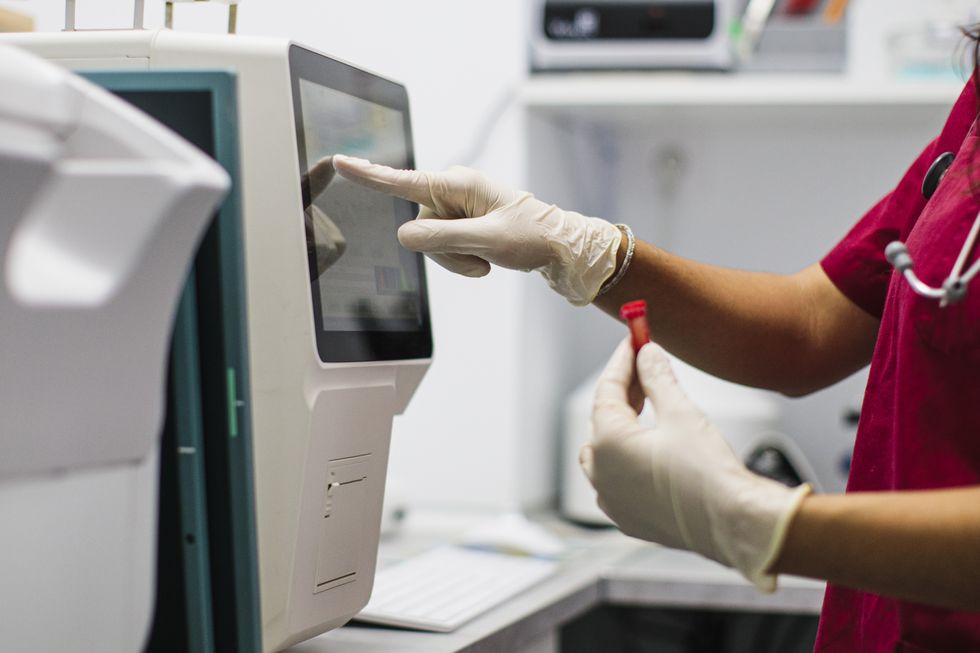
The test could replace invasive procedures and get effective new drugs to Britons faster
Getty Images
What did they find out?
For the study, thought to be the largest of its kind, the researchers looked at data from more than 50,000 healthy people from UK Biobank, which holds medical and lifestyle records of more than half a million Britons.
They analysed the blood samples from this group collected between 2006 and 2010.
Over a follow-up period of 10 to 15 years, more than 1,400 people went on to develop dementia.
By analysing more than 1,400 different proteins in the blood and using artificial intelligence, the researchers found 11 proteins that could accurately predict dementia up to 15 years before diagnosis.
These proteins, found in the liquid component of blood known as the plasma, are markers for the biological changes that happen in people who have dementia or Alzheimer’s disease.
One such protein – known as GFAP – has previously been identified as a potential biomarker in smaller studies.
The implications
Professor Jianfeng Feng, from the University of Warwick’s department of computer science, said this test “could be seamlessly integrated into the NHS and used as a screening tool by GPs”.
He said: “A notable advantage of plasma protein analysis is that it merely necessitates routine blood tests, similar to those conducted during regular hospital visits or health checks.
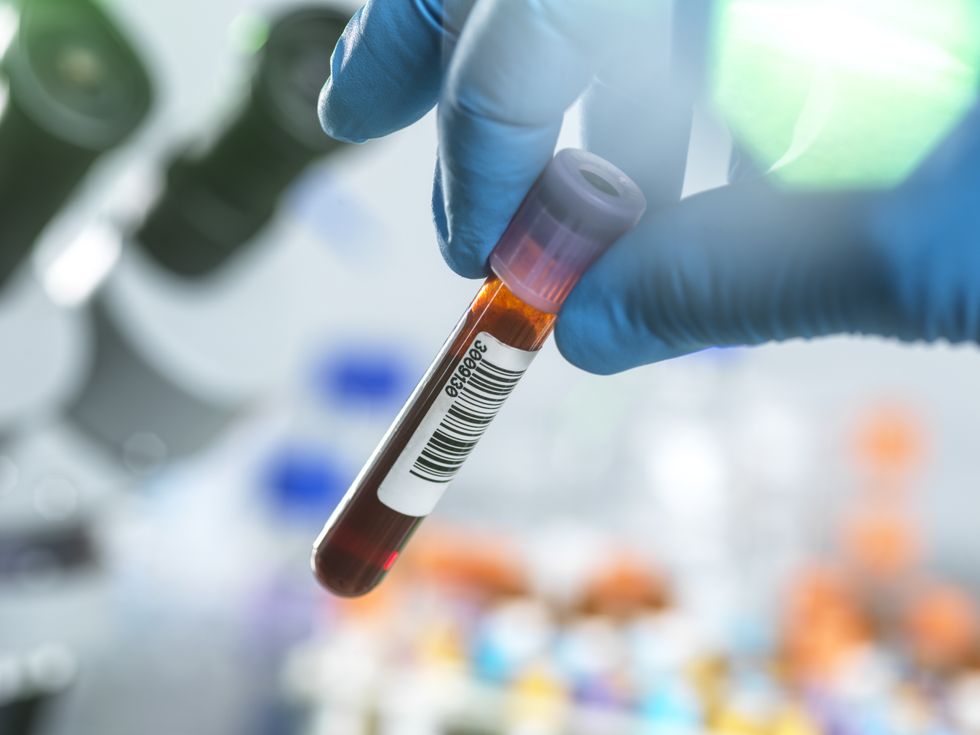
The blood test could be ‘seamlessly integrated into the NHS’, researchers say
Getty Images
24World Media does not take any responsibility of the information you see on this page. The content this page contains is from independent third-party content provider. If you have any concerns regarding the content, please free to write us here: contact@24worldmedia.com
Do you believe the Covid vaccine had negative side effects? VOTE HERE

Latest Google layoffs hit the Flutter and Python groups

‘Women’s rights have been attacked constantly!’

Here’s your chance to own a decommissioned US government supercomputer

AWS S3 storage bucket with unlucky name nearly cost developer $1,300
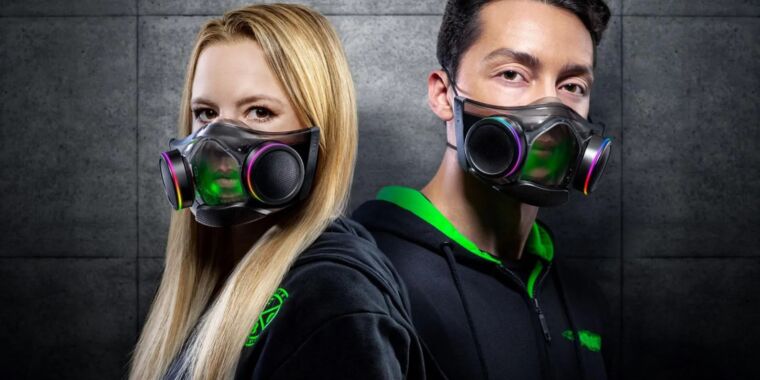
FTC fines Razer for every cent made selling bogus “N95 grade” RGB masks

Apple confirms bug that is keeping some iPhone alarms from sounding

Roundtables: Inside the Next Era of AI and Hardware

Supplements: Ginkgo biloba boosts memory