Thousands of Britains are to be offered a simple blood test for Alzheimer’s as part of a nationwide bid to move the dial on how we diagnose and treat the UK’s biggest killer.
The blood tests could be ready for use in the NHS within five years as part of a drive to address the nation’s low diagnosis rate.
More than 50 memory clinics across the UK will be offering blood tests to about 5,000 volunteers as part of the five-year trial.
University College London and Oxford University will lead the trials to research the cheap tests for proteins in people with early stages of dementia and those who have mild or progressive problems with memory.
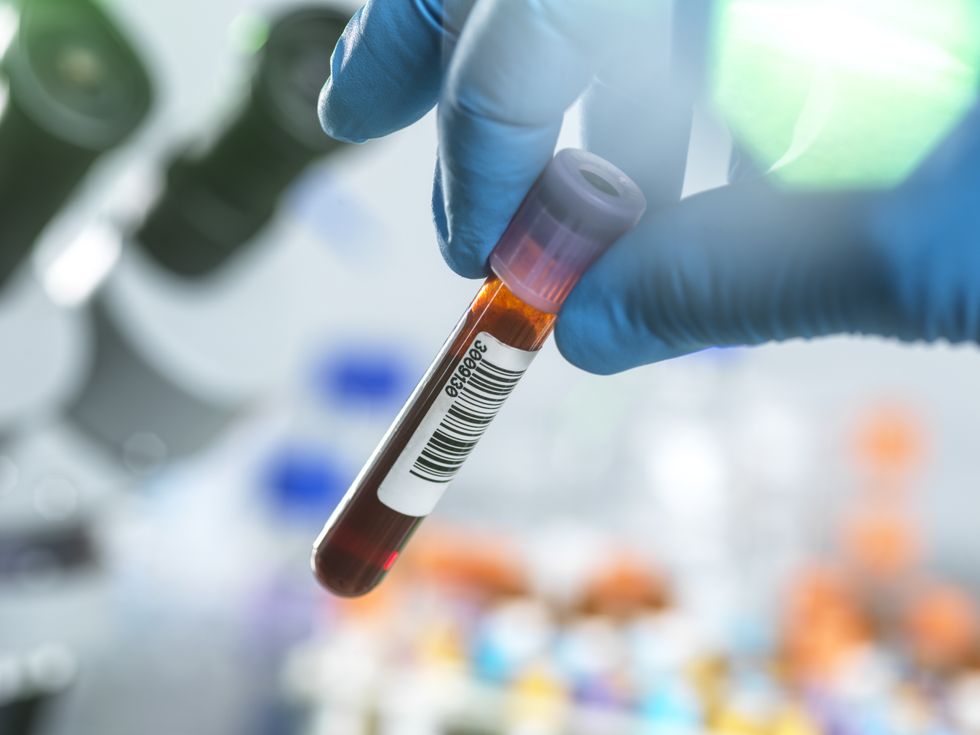
The tests could provide results to patients much sooner and accelerate the introduction of new Alzheimer’s drugs
Getty Images
The trial could make the diagnosis of Alzheimer’s more accessible, with currently just two percent of people able to access tests like PET scans or lumbar punctures, which are only available in around one in 20 NHS memory clinics.
The research teams make up the Blood Biomarker Challenge, sponsored by Alzheimer’s Research UK and the Alzheimer’s Society with £5 million of funding from the People’s Postcode Lottery.
The tests could provide results to patients much sooner and accelerate the introduction of new Alzheimer’s drugs that rely on early diagnosis.
Jonathan Schott, chief medical officer at Alzheimer’s Research UK, will lead a trial on the most promising blood biomarker in tests on 1,100 people across the UK.
His University College London (UCL) team will focus on the most promising biomarker for Alzheimer’s disease, called p-tau217, which can indicate levels of amyloid and tau in the brain.
Its trial will see if measuring p-tau217 in the blood can increase the rate of diagnosis for Alzheimer’s disease in people with early dementia, but also those with mild but progressive memory problems.
The second trial, headed by Dr Vanessa Raymont, from Oxford University, will cover new and existing blood tests on nearly 4,000 people, testing multiple forms of dementia, including Alzheimer’s disease, vascular dementia, frontotemporal dementia and dementia with Lewy bodies.
Fiona Carragher, director of research and influencing at the Alzheimer’s Society, said: “Dementia is the UK’s biggest killer, yet a third of people living with dementia don’t have a diagnosis, which means they’re not able to access care and support.
“At the moment, only two percent of people with dementia can access the specialised tests needed to demonstrate eligibility for new treatments, leading to unnecessary delays, worry and uncertainty.
“Blood tests are part of the answer to this problem – they’re quick, easy to administer and cheaper than current, more complex tests. I’ve spent decades working in research and the NHS and, after years of slow progress, it feels like we’re on the cusp of a new chapter on how we treat dementia in this country.”
Dr Sheona Scales, director of research at Alzheimer’s Research UK, added: “We’ve seen the enormous potential that blood tests are showing for improving the diagnostic process for people and their loved ones in other disease areas. Now we need to see this same step-change in dementia, which is the greatest health challenge facing the UK.
“It’s fantastic that, through collaborating with the leading experts in the dementia community, we can look to bring cutting-edge blood tests for diagnosing dementia within the NHS. And this will be key to widening access to groundbreaking new treatments that are on the horizon.”

Psychological and personality changes like agitation and depression increase the risk of dementia
Getty Images
While these tests will help people to get the right support and treatment they need, Doctor Byron Creese, a Senior Lecturer in Psychology, says it is also important to understand what sorts of symptoms should trigger a blood test in the clinic.
“We know that tests of memory and thinking will be important, but we also need to understand the full spectrum of symptoms that might give us clues as to who is most at risk,” he explained.
“Our research has shown that some behavioural symptoms increase the risk of dementia and that, for some, they might be among the first signs of an underlying disease like Alzheimer’s. For example, psychological and personality changes like agitation and depression increase the risk of dementia and, for some, might be among the first signs of an underlying disease like Alzheimer’s. Better recognition of these broader ranges of symptoms may allow more people to benefit from these incoming blood tests.”
24World Media does not take any responsibility of the information you see on this page. The content this page contains is from independent third-party content provider. If you have any concerns regarding the content, please free to write us here: contact@24worldmedia.com
Do you believe the Covid vaccine had negative side effects? VOTE HERE

Latest Google layoffs hit the Flutter and Python groups

‘Women’s rights have been attacked constantly!’

Here’s your chance to own a decommissioned US government supercomputer

AWS S3 storage bucket with unlucky name nearly cost developer $1,300

FTC fines Razer for every cent made selling bogus “N95 grade” RGB masks

Apple confirms bug that is keeping some iPhone alarms from sounding

Roundtables: Inside the Next Era of AI and Hardware

Supplements: Ginkgo biloba boosts memory