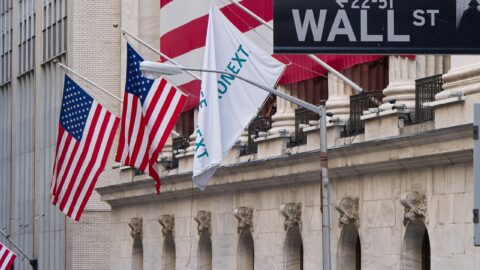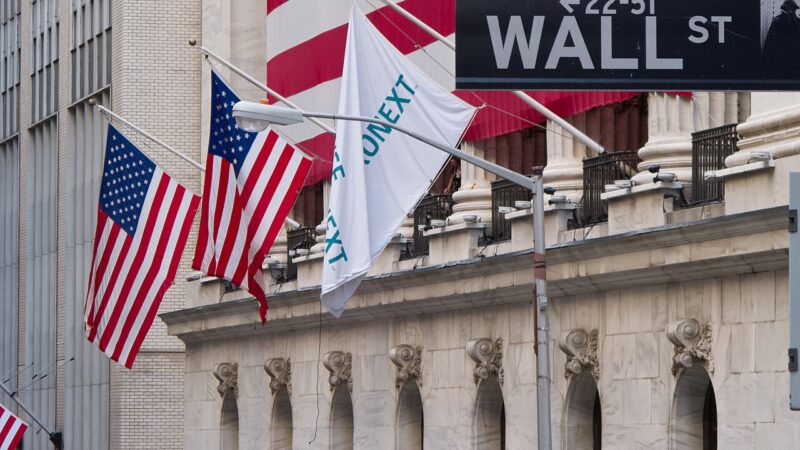
AppLovin jumped 31.04 percent and Krispy Kreme gained 30.68 percent on Thursday, two rare winners on a day when Wall Street lost trillions in value. The Nasdaq Composite fell 5.52 percent, the S and P 500 dropped 4.36 percent, and the Dow Jones Industrial Average lost 1,833 points, in the worst day for all three indexes since April 2025. Chip stocks posted their second biggest fall on record, and the seven largest technology stocks together lost more than 1 trillion dollars in market value. In the middle of that rout, two companies rose by nearly a third, and the contrast is worth understanding.
Why it matters
AppLovin rise was driven by its own results, and by the market judgement that its business is different from the chip makers that led the selloff. The company, which builds software for mobile advertising and for app developers, reported numbers that beat expectations, and investors rewarded it for a story that does not depend on data centre construction or on semiconductor demand. In a market that was selling the AI buildout, a company whose growth comes from advertising technology looked like a refuge, and the buying was concentrated enough to lift the shares by nearly a third in a single session.
Krispy Kreme gain had a different logic, and it is the more interesting of the two. The doughnut chain is a consumer business, far from the technology stocks that dominated the selling, and its rise reflects a rotation that often happens on bad days: investors sell what has risen fastest and buy what has been left behind. A stock that had fallen out of favour can rise sharply when the market looks for safety in the familiar, and a company that sells doughnuts is about as familiar as a business can get. The 30.68 percent gain is a measure of how far the stock had fallen, as much as of how far it rose.
What happens next
The two gains together make a point about market selloffs that is easy to miss. A falling market is not a market in which everything falls, and the stocks that rise on a bad day are often the ones that tell you what the market is really worried about. On Thursday, the market was worried about chips, about data centres, and about the artificial intelligence buildout. It was not worried about mobile advertising or about doughnuts, and the money that left Nvidia and AMD found its way, in part, to companies that had nothing to do with them.
What happens next will test whether the two gains hold. A one day rise of 30 percent can be the start of a revaluation, or it can be a bounce that fades when the market steadies. AppLovin will need to show that its advertising business can keep growing, and Krispy Kreme will need to show that its consumer demand is real and not a single day rotation. For now, the two stocks stand as the exceptions that prove the rule of Thursday: the market fell because it changed its mind about one story, and the companies that were not part of that story were free to rise.