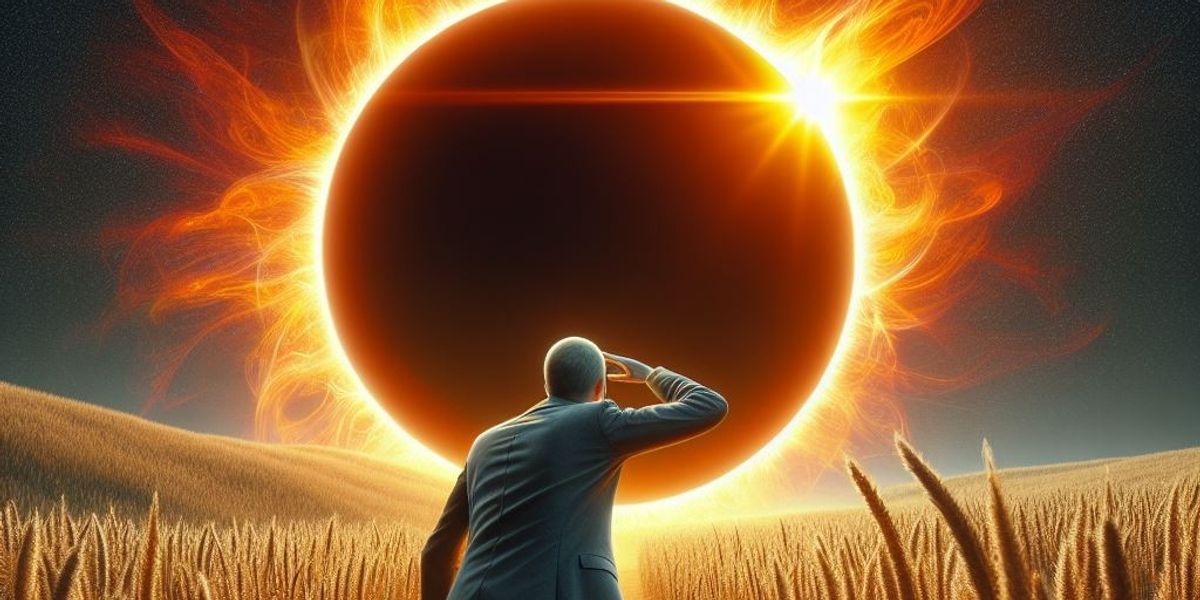
NASA has issued an urgent health warning as millions of people prepare to travel to one of 14 states across the US to see the solar eclipse on April 8.
The astronomical event occurs when the moon temporarily obscures the sun and casts a dark shadow across the earth.
To see the moon cover the sun completely on April 8, you’ll have to be in the path of totality – a 115-mile-wide strip extending diagonally 8,000 miles across Mexico, the United States, and Canada.
Viewers within the path will be able to witness totality for about 2.5 to 4.5 minutes, depending on their location. Viewers outside the path’s boundaries will be able to see only a partial eclipse.
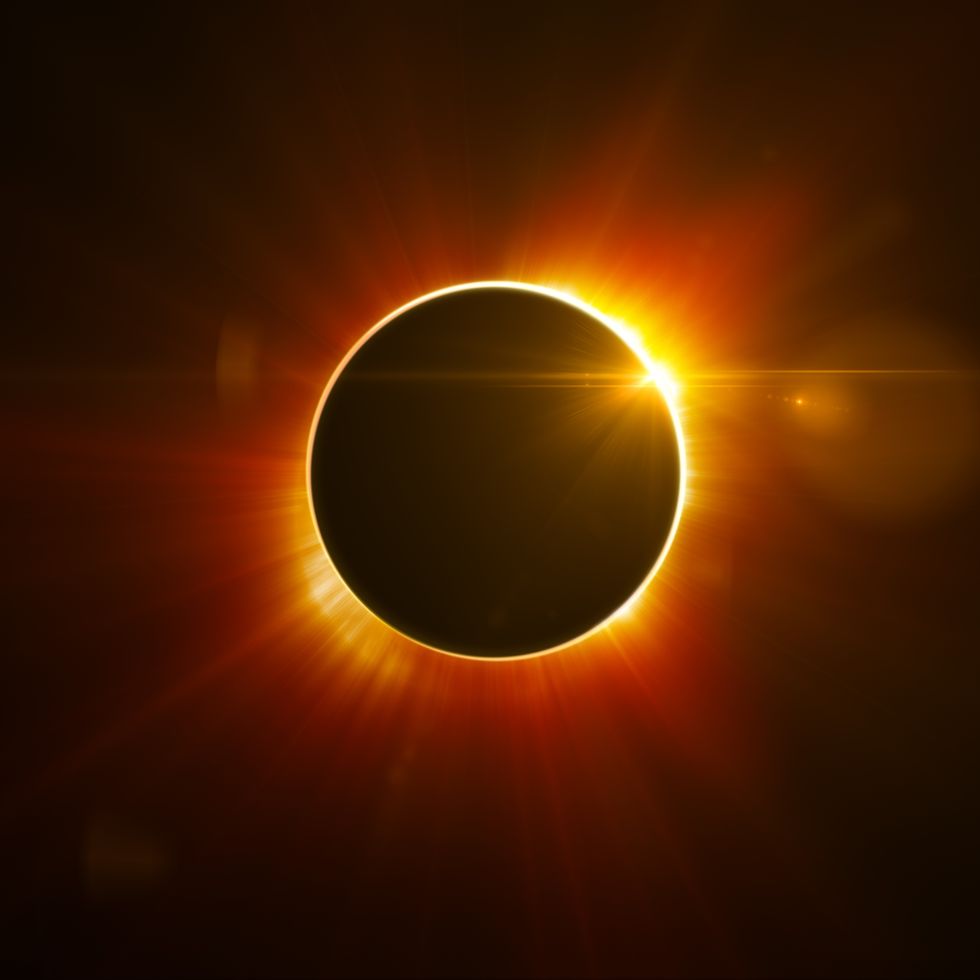
Viewing a solar eclipse can lead to solar retinopathy, or “eclipse blindness”
Getty Images
It will be an event to remember but observers must take precautions. NASA is urging the millions heading out on April 8 to protect their eyes from the sun’s bright rays by wearing ‘eclipse’ sunglasses.
“Please, please put those glasses on,” NASA Administrator Bill Nelson said.
Why?
Viewing a solar eclipse without proper precautions or eye protection can be dangerous to the retina, the light-sensing tissue of the eye, potentially causing permanent blurred vision and/or blind spots.
This is known as eclipse-related solar retinopathy, or “eclipse blindness”.
Solar retinopathy is a condition that occurs when image-sensing photoreceptors are destroyed following initial damage to the retina and adjacent tissue.
According to the American Society of Retina Specialists (ASRS), the injury is similar to thermal burns that can be caused by laser.
Depending on the extent of the injury, people have suffered temporary vision loss, residual blurring and/or distortion, or permanent vision loss.
The warning is not abstract: during the 2017 eclipse, a woman who viewed the event without appropriate eye protection in New York started complaining of a black spot in her vision.
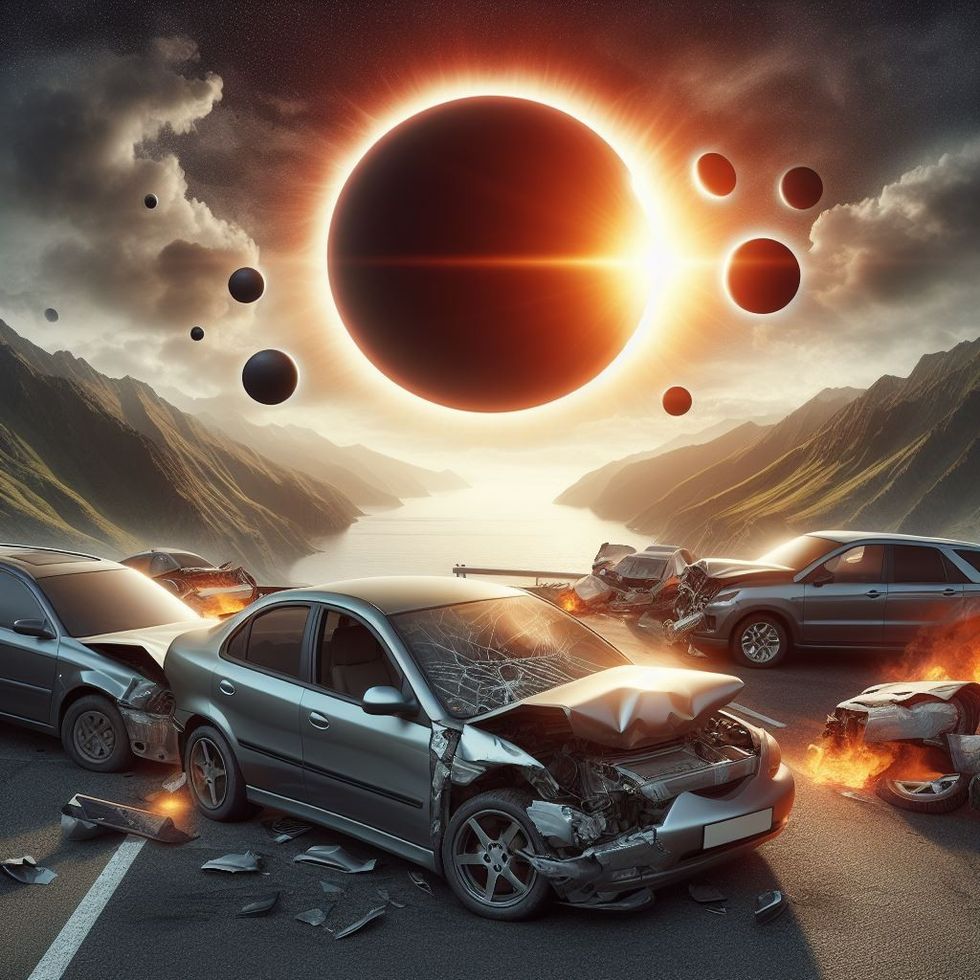 April’s solar eclipse feared to be a mass death event as scientists warn of sharp rise in fatal car crashes
Bing/DALL·E 3
Doctors discovered retinal damage in the shape of a “crescent” – corresponding to the eclipse’s shape.
Solar retinopathy is not the only health risk to watch out for next week. Scientists warn next week’s solar eclipse could lead to an uptick in fatal car crashes.
Researchers from the University of Toronto analysed road traffic data in the days before and after the 2017 solar eclipse in the US and found that there were more than 1,000 additional car crash deaths during that time.
They fear that history may repeat itself this time around.
24World Media does not take any responsibility of the information you see on this page. The content this page contains is from independent third-party content provider. If you have any concerns regarding the content, please free to write us here: contact@24worldmedia.com
Do you believe the Covid vaccine had negative side effects? VOTE HERE
Latest Google layoffs hit the Flutter and Python groups

‘Women’s rights have been attacked constantly!’

Here’s your chance to own a decommissioned US government supercomputer
AWS S3 storage bucket with unlucky name nearly cost developer $1,300
FTC fines Razer for every cent made selling bogus “N95 grade” RGB masks

Apple confirms bug that is keeping some iPhone alarms from sounding
Roundtables: Inside the Next Era of AI and Hardware

Supplements: Ginkgo biloba boosts memory