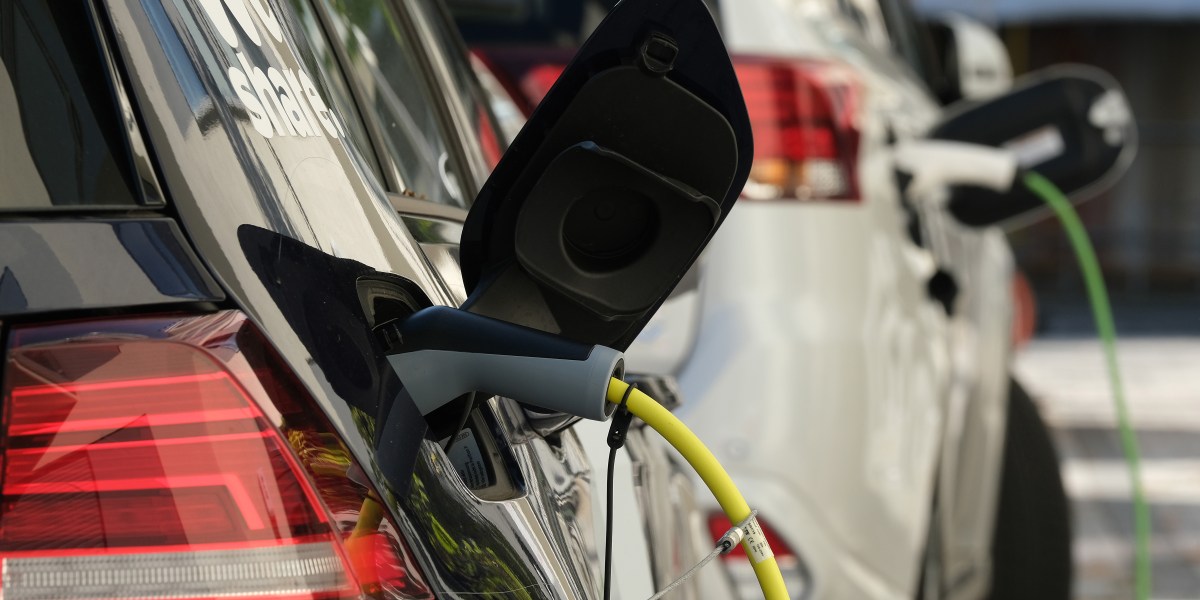
I spend an inordinate amount of time thinking about transportation in general, since it’s one of the biggest areas we need to clean up to address climate change: it accounts for something like a quarter of global emissions. And the vehicles that we use to shuttle around to work, school, and the grocery store in many parts of the world are a huge piece of the problem.
Last week, MIT Technology Review hosted an event where my colleagues and I dug into a conversation about the future of batteries and the materials that go into them. We got so many great questions, and we answered quite a few of them (subscribers should check out the recording of the full event here).
But there were still a lot of questions, particularly about EVs, that we didn’t get to, so let’s take a look at a few. (I’ve edited these for length and clarity, but they came from subscribers, so thank you to everyone who submitted!)
Hybrids are sometimes relegated to the fringes of the EV discussion, but I think they’re absolutely worth talking about.
Before we get into this, let’s get a couple of terms straight. All hybrid vehicles use both an internal-combustion engine that burns gasoline and a battery, but there are two key types to know about. Plug-in hybrids can be charged up using an EV charger and run for short distances on electricity. Conventional hybrids have a small battery to help recapture energy that would otherwise be wasted, which boosts gas mileage, but they always run on gasoline.
Any technology that helps reduce emissions immediately can help address climate change, and even a conventional hybrid will cut emissions by something like 20%.
Personally, I think plug-in hybrids in particular are a great option for people who can’t commit to an EV just yet. These vehicles often have a range of around 50 miles on electricity, so if you’re commuting short distances, nearly all your driving can be zero-emissions.
Plug-ins aren’t the perfect solution, though. For one thing, the vehicles may have higher rates of problems than both EVs and gas-powered vehicles, and they need a bit more maintenance. And some studies have shown that plug-in hybrids don’t tend to get the full emissions benefits advertised, because people use the electric mode less than expected.
24World Media does not take any responsibility of the information you see on this page. The content this page contains is from independent third-party content provider. If you have any concerns regarding the content, please free to write us here: contact@24worldmedia.com

Do you believe the Covid vaccine had negative side effects? VOTE HERE

Latest Google layoffs hit the Flutter and Python groups

‘Women’s rights have been attacked constantly!’

Here’s your chance to own a decommissioned US government supercomputer

AWS S3 storage bucket with unlucky name nearly cost developer $1,300

FTC fines Razer for every cent made selling bogus “N95 grade” RGB masks

Apple confirms bug that is keeping some iPhone alarms from sounding

Roundtables: Inside the Next Era of AI and Hardware

Supplements: Ginkgo biloba boosts memory