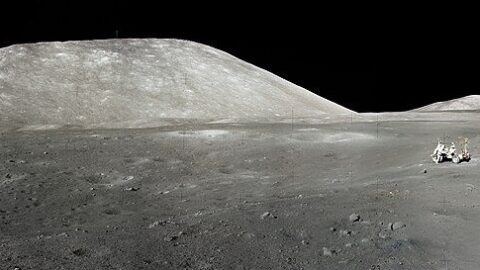
During their lunar flyby, the Artemis II crew saw five extremely faint flashes on the Moon's surface, caused, NASA's preliminary science report concludes, by small rocks striking at thousands of miles per hour. The agency says its science team ruled out cosmic rays and spacecraft reflections, and estimates the incoming fragments were no more than a couple of inches across.
The observations were made during a planned communications blackout on the lunar far side, from roughly forty-six thousand miles away, which is what makes them remarkable: impact flashes are normally the business of automated telescopes, and NASA describes these as likely the faintest ever seen with the unaided human eye. Apollo crews reported similar flashes from lunar orbit, so the phenomenon has a lineage; what is new is the quality of the record around it, crew annotations, imagery and audio preserved in the archive released this week. The measurement matters beyond its charm. Every flash is a data point in the census of small objects striking the Moon, and that rate is an engineering input: it tells habitat designers how often micrometeorites arrive and how much shielding a surface base needs against the rain of small stones that never stops.
Science advances by claims that survive checking. The Science desk reads for the structure of the evidence, what was measured, in what system, with what uncertainty, and reports preliminary findings as preliminary. That caution is not a lack of enthusiasm. It is how the desk protects the reader's trust for the findings that turn out, on replication, to be real.
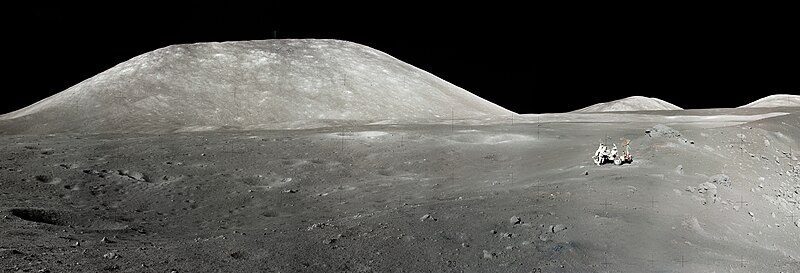
The Moon has no atmosphere to burn up incoming rock, so its surface is a recording instrument that has been running for four billion years. Human eyes have now read a few entries in real time. Turning those sightings into a rate, and comparing it with telescopic surveys, sharpens the risk model for everything the Artemis programme intends to build.
The preliminary report is the start of the analysis, not its conclusion. Researchers will correlate the flashes with imagery, test the size estimates and fold the observations into impact-flux models. The crew's annotated images, released publicly, mean independent teams can check the work rather than merely applaud it.