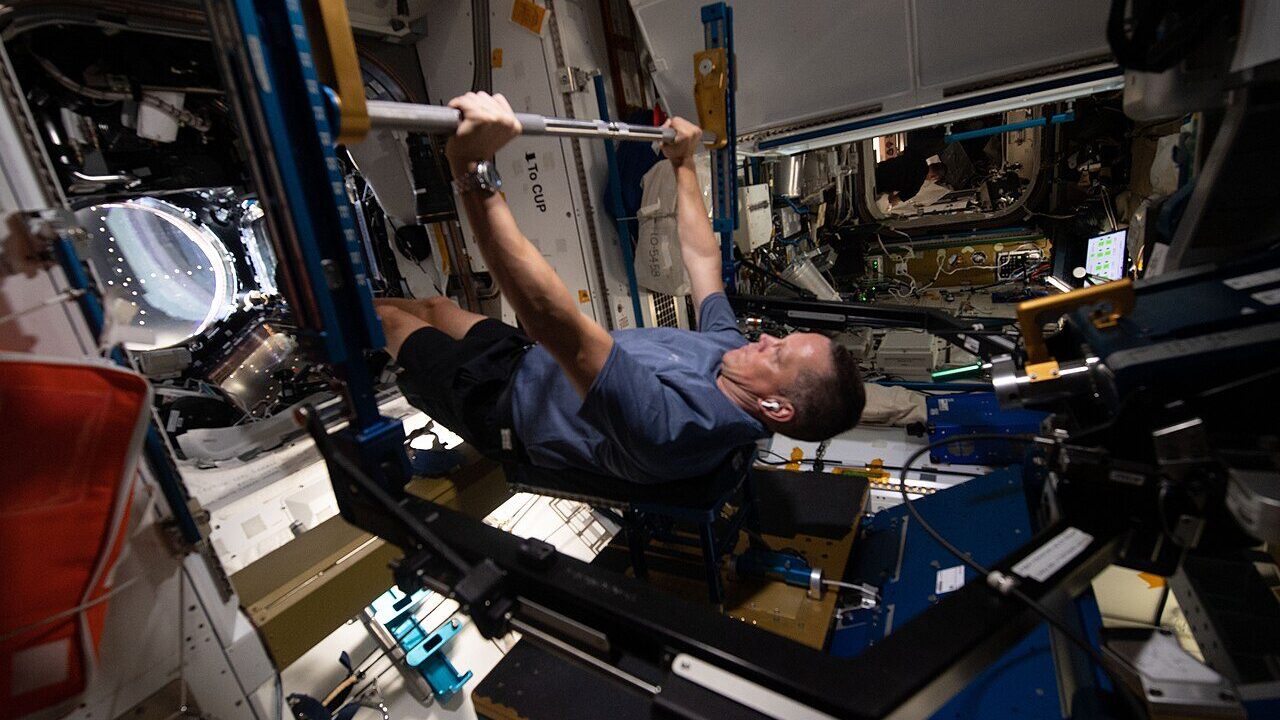
Astronauts who exercise in space preserve cardiovascular health well enough that, after six months, none showed a more stressed heart response under Mars-like gravity than standing upright on Earth before flight, according to research reported by STAT from a study in Circulation. The work, led by cardiologist Benjamin Levine in Dallas, used ultrasound imaging performed by the astronauts themselves to watch hearts adapt across a mission.
The context is a mission profile that does not yet exist: roughly six months travelling to Mars, eighteen months on its surface at three-eighths of Earth's gravity, and six months back. Weightlessness weakens bone and muscle; the open question was whether the heart, unloaded for months, would cope when gravity returned part-way. Earlier work inferred heart function from blood pressure and pulse. This study taught crews to perform echocardiograms in flight, producing direct images of the heart's structure and function against which countermeasures, principally exercise, could be judged. Levine's reassurance, as quoted by STAT, is specific rather than sweeping: the cardiovascular system responded, after flight, no worse under simulated Mars gravity than it had standing on Earth before launch. The caveats a researcher would add are sample size, astronaut fitness and the difference between a tilt test and a working day on Mars.
Health reporting carries a duty other beats do not: readers may act on it. Our Health desk therefore attributes findings to the study or agency that produced them, states the population and method in plain terms, and repeats the limits researchers acknowledge. A news story can inform a conversation with a clinician. It should never try to replace one.
Mars planning is a chain of unsolved medical problems, and each closed question removes a reason a crew might be stranded by its own physiology. A finding that an exercise regime already in use protects the heart is unusually practical: it validates equipment and schedules that spacecraft designers must commit to years in advance.
Longer missions and the Artemis programme will supply the follow-up data, including how older and less selected crews respond. The study's method may travel furthest: crews imaging their own hearts, interpreted on Earth, is a template for medical autonomy when the nearest hospital is a planet away.